ISO 9001, ISO 14001, ISO 45001, and IECQ QC080000
 Over 15 Years of Expertise
 FREE samples provided to ensure product satisfaction
 Rapid Turnaround: Mass Production Complete in 15 - 20 Days
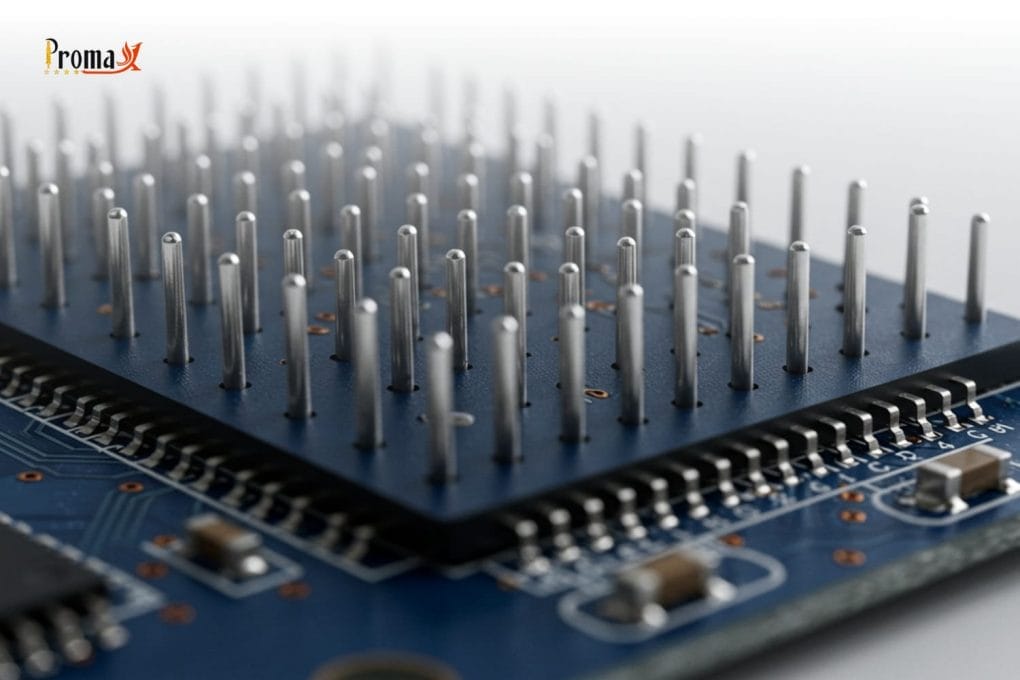
Little spring-loaded connectors called pogo pins make or break your electronics – literally!
These metal contacts push against circuit boards to keep electricity moving & flowing. But when things like dirt or bad designs get in the way… Well, your devices get glitchy or just die. It all comes down to something called “contact resistance” – the invisible barrier that forms when metals touch.
Key Takeaways
- Good connections stay under 50 mΩ resistance (that’s super low!)
- Gold coating fights corrosion and keeps electricity flowing
- Spring pressure (about 1 N) makes sure pins stay connected
- Heat, moisture, and dirt are your connections’ worst enemies
What’s Really Happening When Pogo Pins Connect?
When a pogo pin touches another metal, tiny bumps on each surface are the only parts actually touching. Weird, right? Even “smooth” metal isn’t really smooth up close! This limited contact area creates electrical contact resistance, measured in milliohms (mΩ). Quality spring-loaded pins keep this resistance between 10-200 mΩ, with gold-plated ones performing best.
Your PCB needs clean, low-resistance connections to work right. When resistance gets too high, your whole electrical connection becomes unreliable.
Why do Bad Connections Kill Your Devices?
When resistance gets high, voltage drops, signals get garbled, and your data turns to nonsense. Modern electronics running on tiny voltages hate this the most. Poor connections are device killers!
High resistance also creates heat. That heat damages your components, hurts conductivity, and slows down data. Your testing equipment needs super-clean connections or you’ll get false readings. Industry pros say good pogo pin connectors should stay under 50 milliohms. Otherwise, your whole electrical connection becomes unreliable.
We’ve seen customers waste thousands replacing perfectly good circuit boards when the real problem was just bad contact resistance. A simple fix could have saved their equipment!
The Three Parts that Make these Pins Work
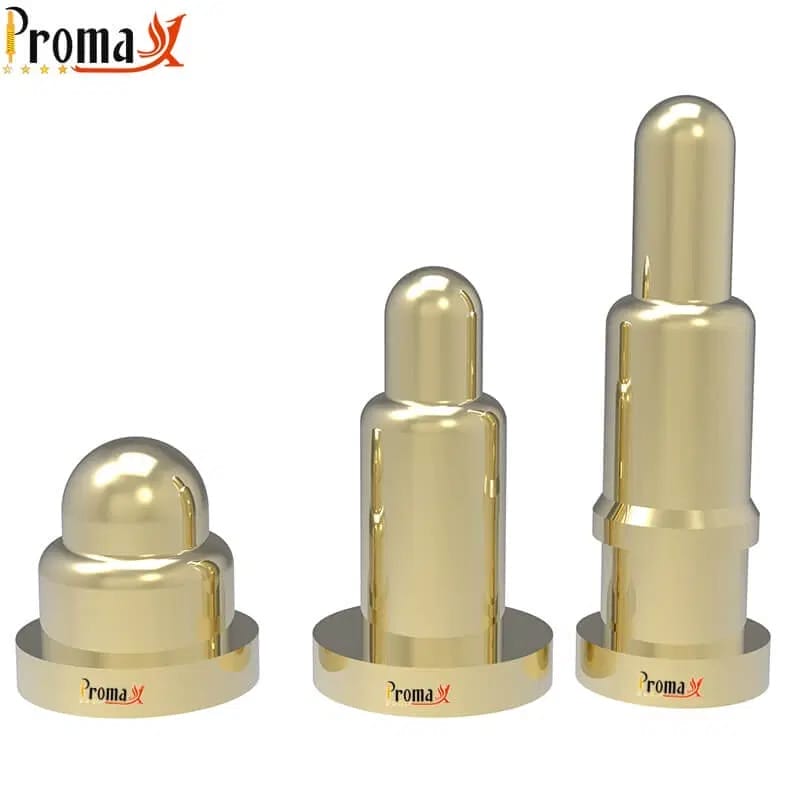
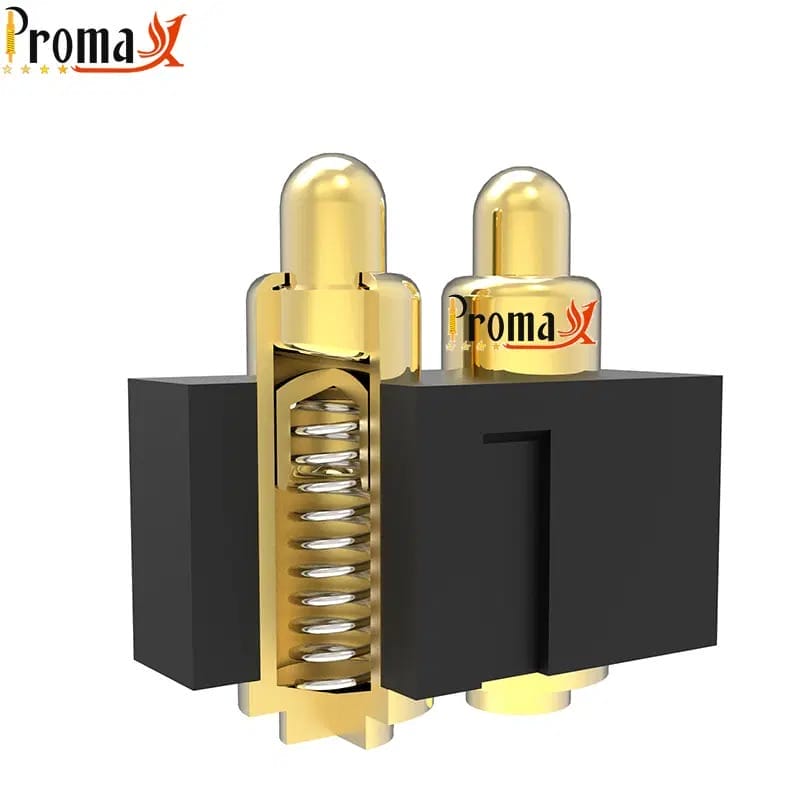
Every pogo pin has three critical parts working together: the plunger, the barrel housing, and the internal spring.
The Plunger
This springy bit moves in and out. Some have flat tips, some pointy ones, some at right angles for tight spaces. The plunger’s job is to push against whatever you’re connecting to. Its surface needs to stay clean for good conductivity.
The Barrel Housing
This hollow tube holds everything together. It keeps the plunger moving straight and true. Good barrels are precision-made – even tiny manufacturing flaws can mess up your connection!
The Internal Spring
This tiny coil creates that crucial contact force. It pushes the plunger with just the right pressure – typically around 60 grams of force at mid-stroke. Too little force? Bad connection. Too much? You’ll damage your components.
How do These Pins Connect to Your Applications?
You’ve got options for attaching pogo pins to your circuit boards: solder connections, press-fit options, surface mount, and through-hole mounting.
Solder Connections
The classic approach! Solder creates permanent, stable connections. Great for devices where you’ll never need to swap pins.
Press-Fit Options
Many pins just push into holes – no solder needed! This speeds up assembly and makes your production efficiency skyrocket. We’ve seen factories cut assembly time in half with these.
Surface Mount Technology
For tiny electronics, surface mount pins stick right to the board face. Perfect for automated assembly where space is tight.
Through-Hole Mounting
Need extra strength? Through-hole mounting gives you mechanical stability when your connection might face abuse. Perfect for rugged applications.
Working Stroke Matters More Than You Think
“Working stroke” is how far your pin compresses while still working right. Most pins need 1-3 mm of travel, but some special ones handle up to 6 mm for challenging mating surfaces.
Temperature changes cause everything to expand and shrink. Good pin design accounts for this thermal expansion, maintaining contact even when parts grow or shrink as temperatures change.
One customer came to us after their outdoor device kept failing in summer. Turns out their cheap pins couldn’t handle the heat! Our custom spring solution solved their problem instantly.
Gold, Silver, or Nickel? Coating Makes a Huge Difference
| Coating | Performance | Durability | Best For | Handles Tough Stuff |
|---|---|---|---|---|
| Gold | Amazing (10-50 mΩ) | Super tough | Critical equipment | Survives practically anything |
| Hard Gold | Great (20-60 mΩ) | Very durable | Test points | Handles most environments |
| Silver | Good (30-70 mΩ) | OK | Budget-friendly projects | Tarnishes quickly |
| Nickel | Decent (50-100 mΩ) | Pretty good | Basic connections | Works in clean places |
Gold plating gives the lowest contact resistance around. It doesn’t rust or corrode, even in harsh environments. It costs more, but when reliability matters, nothing beats gold for corrosion resistance!
One Brisbane electronics maker switched all their pins to gold after humidity problems nearly ruined their reputation. Now their devices work flawlessly, even during our humid summers.
Silver starts out great, but tarnishes fast. Hard gold (gold mixed with other metals) gives you the perfect balance for thousands of mating cycles.
Need pogo pins fast? Talk to an engineer
Get a custom quote, spec matching, and manufacturing guidance—without slowing down your project.
- ISO 9001 / 14001 / 45001 + IECQ QC080000
- 15+ years of expertise
- Free samples
- Mass production in 15–20 days
Finding Problems Before They Find You
Testing connection resistance is super easy with the right tools:
What You’ll Need
- A milliohm meter with four-wire capability
- Something to hold your pins at the right height
- A consistent power source
- Clean workspace (dust ruins everything!)
Quick Testing Steps
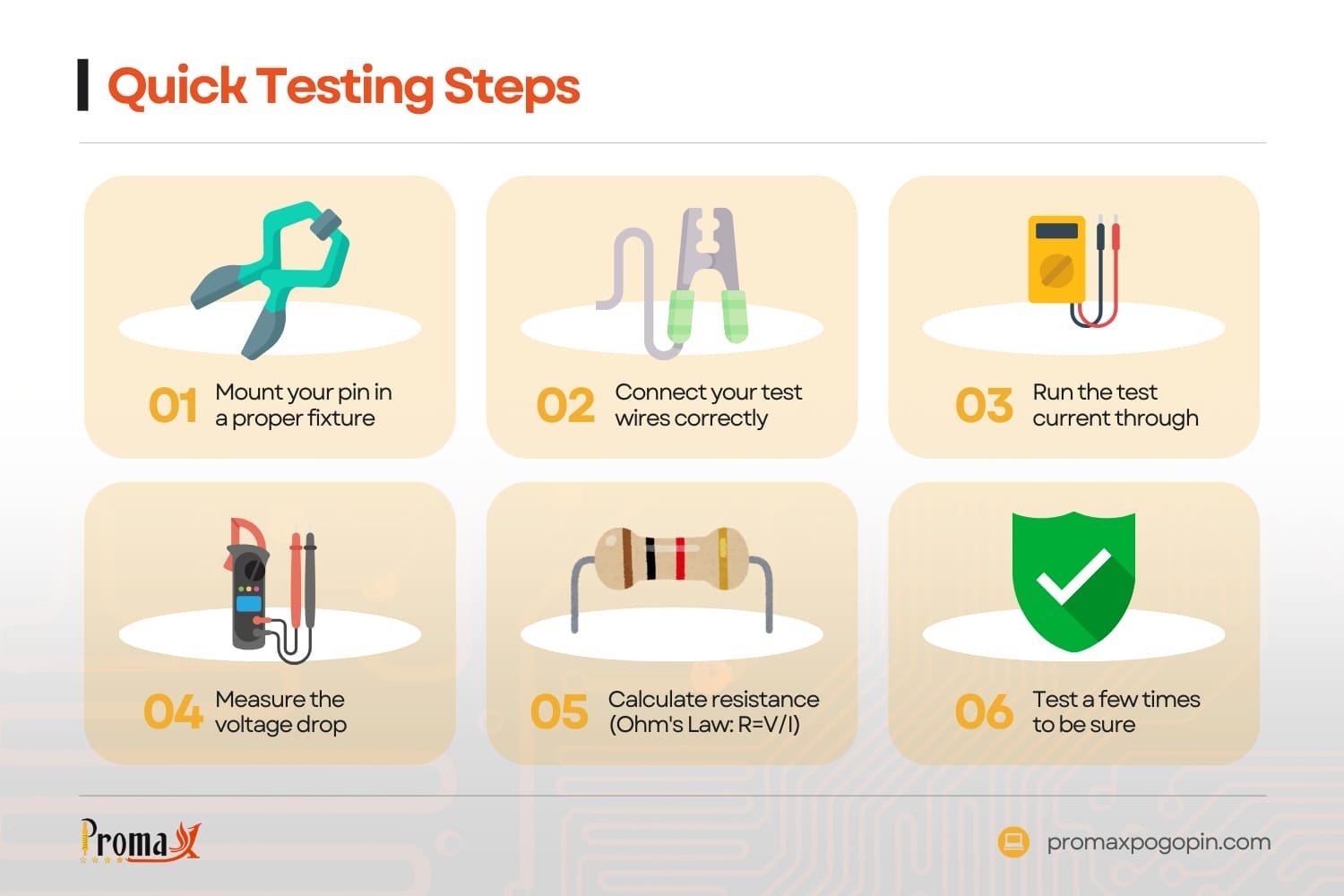
- Mount your pin in a proper fixture
- Connect your test wires correctly
- Run the test current through
- Measure the voltage drop
- Calculate resistance (Ohm’s Law: R=V/I)
- Test a few times to be sure
Check during manufacturing and regular maintenance. Catch problems before your products fail and customers get cranky!
What’s Killing Your Connections?
Several things mess up spring-loaded connectors, broken up into material and mounting problems, such as surface plate quality, as well as physical factors like spring tension weakening.
Materials and Mounting
- Base metals (brass gives good grounding)
- Surface plate quality and thickness
- Whether you used through-hole or surface mount
- Compatibility with solder process temperatures
Physical Factors
- Spring tension weakening over time
- Shrinking contact area from wear
- Parts fitting too loose or tight
- Dirt building up on mating surfaces
Environmental Factors
- Extreme temperatures frying components
- Humidity creating invisible corrosion
- Chemical vapors eating metal surfaces
- Dust gets everywhere (and it always does!)
Making Your Connections Bulletproof
Smart companies protect their electrical connections with certain design tricks, maintenance hacks, and smart selection.
Design Tricks
- Choose gold coating for anything important
- Use enough spring pressure (but not too much!)
- Design fixtures that align pins perfectly
- Shield sensitive connections from the elements
Maintenance Hacks
- Clean contact surfaces regularly
- Replace pins at first sign of trouble
- Test resistance during regular checkups
- Protect unused connections from contamination
Smart Selection
- High-current applications need beefy pins
- Precision jobs need tight-tolerance components
- Machine assembly works best with specific configurations
- Outdoor use demands special corrosion protection
Picking Pins for the Tough Jobs
Some applications punish ordinary connectors. When reliability absolutely matters:
Mechanical Stability Comes First
Choose pins with tight manufacturing tolerance. These hold position better under shock and vibration in demanding applications. They keep working even when your equipment gets knocked around.
Grounding Applications Need Special Care
Safety depends on solid grounding connections. Pick pins designed specifically for this job, with extra-low impedance and fail-safe design.
High-Cycle Testing Equipment
Some pins connect and disconnect millions of times. For these, you need precious metal plating that stands up to abuse. The right pins maintain performance after thousands of mating cycles.
Where Good Connections Save the Day

Solid, low-resistance pogo pin connectors matter most in testing equipment, consumer electronics, and industrial systems:
Testing Equipment
- Circuit board testers that can’t afford false readings
- Quality control systems checking thousands of parts daily
- Diagnostic equipment where accuracy is everything
Consumer Electronics
- Phone charging ports that get used constantly
- Battery connections that power your favorite gadgets
- Data transfer points handling your precious information
Industrial Systems
- Factory machines that can’t afford downtime
- Monitoring systems watching critical processes
- Service equipment technicians rely on daily
Get Your Connections Fixed Today
Bad connections lead to failed devices, angry customers, and wasted money. Understanding what’s happening at the microscopic level helps you build better products that don’t quit when you need them most.
Contact our team at Promax Pogo Pin today! We’ll help match you with exactly the right pins for your specific application. Our technical support team knows these tiny components inside out, and we’ve solved connection problems for companies all over Australia. Don’t let tiny connection problems cause big headaches!
Pogo Pin Contact Resistance FAQs
How do I fix high resistance problems?
Clean your contact points with isopropyl alcohol. Check if your springs still have proper tension. Look for worn-out plating under magnification. Test with a reliable meter. Still having issues? Replace your pins or upgrade to gold-coated ones – they cost a bit more but save massive headaches!
How many times can pogo pins connect before failing?
Depends on quality! Basic pins work for thousands of connections. Premium ones last up to a million cycles. Eventually, plating wears off, springs get tired, and resistance climbs. The best pins with hard gold coating keep working long after cheaper ones fail. We’ve seen good pins outlast the devices they’re installed in!
Can I use these pins in outdoor equipment?
Absolutely – if you pick the right ones! Choose gold-coated pins that resist corrosion. Look for sealed designs that keep moisture and dirt out. Add protective covers against the elements. And in harsh environments, schedule regular cleanings to keep everything working smoothly.
Back to Top: Pogo Pin Contact Resistance | Promax Pogo Pin Guide
Need pogo pins fast? Talk to an engineer
Get a custom quote, spec matching, and manufacturing guidance—without slowing down your project.
- ISO 9001 / 14001 / 45001 + IECQ QC080000
- 15+ years of expertise
- Free samples
- Mass production in 15–20 days