 ISO 9001, ISO 14001, ISO 45001, and IECQ QC080000
 Over 15 Years of Expertise
 FREE samples provided to ensure product satisfaction
 Rapid Turnaround: Mass Production Complete in 15 - 20 Days
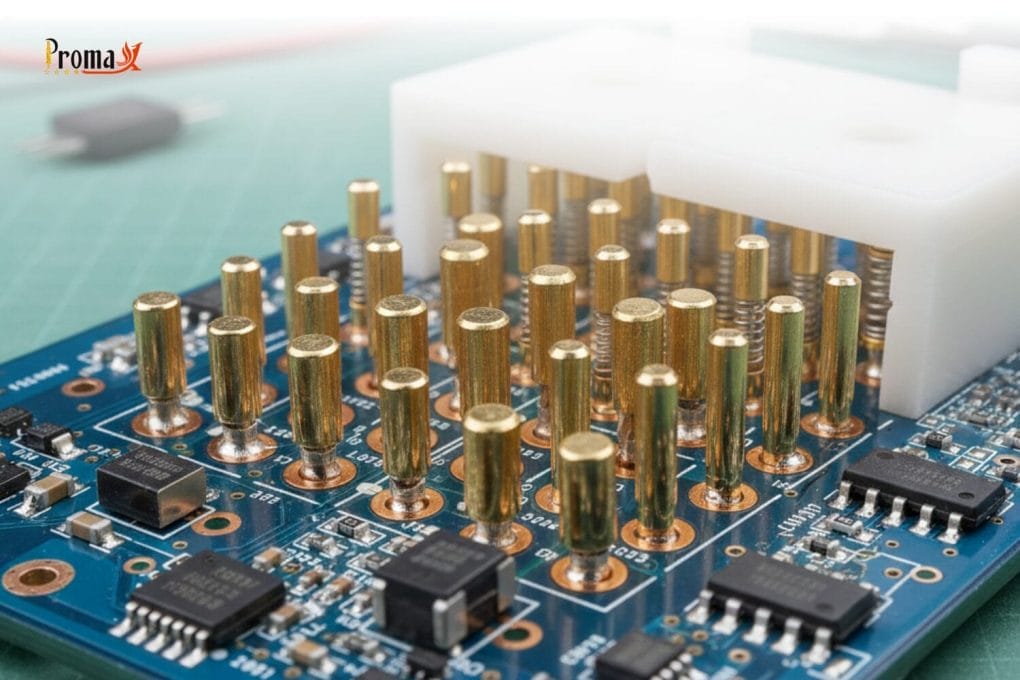
Pogo pins are essential components providing reliable electrical connections across countless applications, from PCB testing equipment probing circuit boards to battery charging systems in consumer electronics to medical devices requiring frequent docking. The short answer to whether pogo pins are conductive is yes, absolutely. But understanding how they achieve that conductivity, what materials make it possible, and how different designs affect performance matters when you’re selecting pogo pins for applications where electrical reliability isn’t optional.
Promax Pogo Pin manufactures high-performance pogo pin connectors engineered specifically for demanding applications requiring reliable electrical contact. Our services include custom pogo pin design, precision manufacturing, and testing to ensure connectors meet your specific conductivity and durability requirements.
This is how pogo pins actually work to conduct electricity, the materials ensuring consistent conductivity over time, and how they’re applied across electronics, automotive systems, medical devices, and industrial equipment.
Key Takeaways
- Pogo pins are designed for high conductivity through materials like gold-plated brass and beryllium copper.
- Their current carrying capacity ranges from 1A to 10A, depending on pin size and material.
- Gold plating and nickel plating improve contact resistance and ensure reliable electrical connections.
- Pogo pin connectors are perfect for high-frequency applications like RF testing and USB data transmission.
- The cycle life of pogo pins can reach up to 2 million mating cycles, ensuring durability.
What are Pogo Pins & How do they Conduct Electricity?
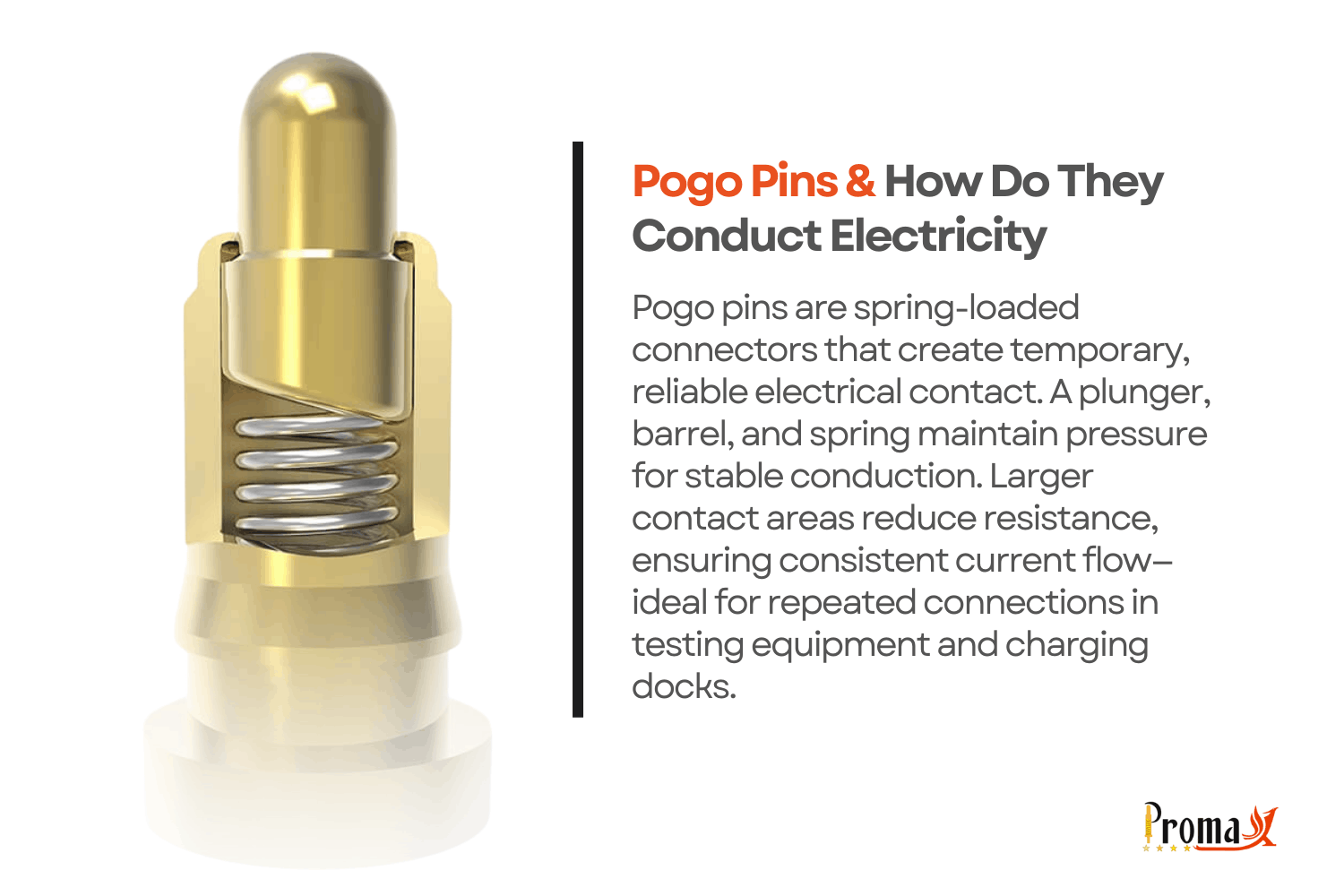
Pogo pins are spring-loaded connectors designed to create temporary but reliable electrical contact in applications where traditional fixed connectors won’t work or would wear out too quickly. The design is elegantly simple – three main components working together: the plunger, the barrel, and the spring mechanism. When you press the plunger against a contact pad, the spring compresses whilst maintaining pressure ensuring consistent electrical connection. Release the pressure and the spring pushes the plunger back out, ready for the next connection.
The contact area between the plunger tip and the contact surface directly affects contact resistance, larger contact areas reduce resistance, allowing stable current flow without voltage drop or heating. This is why pogo pins work so well in applications demanding reliable electrical connections despite repeated mating cycles, like automated test equipment probing circuit boards thousands of times daily or battery charging stations where devices dock and undock constantly.
Why are Pogo Pins Ideal for High-Current Applications?
Pogo pins are specifically designed to handle high currents efficiently. With current capacities ranging from 1A to 10A, they ensure a stable current flow without degrading performance. The conductive properties of materials like gold-plated brass and beryllium copper make them perfect for high-current applications like battery charging or electric vehicle connectors.
The nickel or gold plating enhances the corrosion resistance of the pogo pin, ensuring longevity and reliable electrical contact. These pins are designed to handle the electric current flow that other types of connectors may struggle with. By reducing contact resistance, pogo pins ensure minimal energy loss, making them a superior choice for high-current applications.
| Material | Current Capacity | Temperature Range | Contact Resistance |
|---|---|---|---|
| Gold-Plated Brass | 1A – 10A | -55°C to 150°C | <50 mΩ |
| Beryllium Copper | 1A – 5A | -55°C to 150°C | <30 mΩ |
| Phosphor Bronze | 1A – 10A | -40°C to 85°C | <60 mΩ |
How do Materials Affect Pogo Pin Conductivity?
The materials used in the construction of pogo pins directly influence their conductivity and reliability. For example:
- Gold plating is used on the plunger to reduce contact resistance and enhance corrosion resistance, making it ideal for high-frequency applications.
- Beryllium copper is typically used for the barrel due to its strength and electrical conductivity, especially in applications where high current flow is needed.
- Phosphor bronze provides the reliability required in harsh environments, offering a good balance of strength and electrical contact.
By optimizing the material selection for pogo pins, manufacturers can enhance the pogo pin’s durability and ensure consistent contact resistance over time.
What are the Common Applications for Pogo Pins?

Pogo pins are widely used in various industries due to their reliable electrical connections and high conductivity. Here are some of the most common applications:
1. PCB Testing:
Pogo pins are used in testing jigs to create temporary connections for in-circuit testing. This allows for fast, non-destructive testing of PCBs, making them ideal for electronics manufacturing.
2. Battery Charging:
In charging docks for wearables, electric vehicles, and smart devices, pogo pins provide consistent connections. The high current capacity of pogo pins ensures reliable performance during fast charging.
3. Medical Devices:
Pogo pins enable reliable electrical contact in medical implants and diagnostic equipment. These pins are critical in ensuring bioelectric signal transmission with minimal interference.
4. Consumer Electronics:
Pogo pin connectors are essential in ensuring high-speed data transmission for applications such as USB and HDMI connectors. Their low contact resistance ensures that data flows smoothly without significant loss, even in high-speed connections.
5. Automotive Systems:
Pogo pins play a role in battery management systems and automotive electronics, where reliable electrical contact is crucial. These pins can handle the high current and electrical transmission required in modern vehicles.
6. Aerospace:
In aerospace applications, pogo pins are used to connect systems exposed to extreme temperatures and vibration. Their thermal conductivity and reliability make them perfect for high-stress environments where corrosion resistance is key.
7. Harsh Environment Applications:
In military and industrial systems, pogo pins are exposed to high humidity, high temperatures, and vibration. These pins are engineered to maintain their conductivity and corrosion resistance even in extreme environmental conditions.
How long do Pogo Pins Last?
The cycle life of pogo pins depends on several factors, including the material, surface treatments, and the environmental conditions in which they are used. On average, pogo pins can withstand anywhere from 10,000 to 2 million mating cycles. The use of gold plating and nickel plating helps extend the lifespan of pogo pins by reducing contact resistance and enhancing corrosion resistance.
Regular maintenance, such as cleaning the contact points, can further extend their lifespan, ensuring reliable performance in both high-frequency and high-current applications.
Can Pogo Pins Handle High-Frequency Signals?
Yes, pogo pins are specifically designed for high-frequency applications. Their low contact resistance ensures minimal signal loss, which is crucial for RF testing and USB data transmission. By maintaining stable contact pressure through the spring mechanism, pogo pins ensure consistent signal integrity even in high-speed data transmission systems.
Their ability to maintain a stable electrical connection makes pogo pins ideal for use in systems where high-frequency signals are critical for performance, such as consumer electronics and telecommunication equipment.
Choose Promax Pogo Pin for High-Quality Pogo Pins
If you’re looking for reliable, high-performance pogo pins that offer exceptional conductivity and durability, Promax Pogo Pin is your trusted pogo pin manufacturer. Our pogo pins are crafted from high-quality materials like gold-plated brass and beryllium copper, ensuring low contact resistance and reliable electrical connections for high-current and high-frequency applications. Whether for PCB testing, battery charging, or automotive systems, Promax Pogo Pin has the perfect connector solution for you. Request a quote or contact us today for more information on our pogo pin connectors.
FAQs on Pogo Pins Conductive
What materials are used in pogo pins to ensure conductivity?
Pogo pins are typically made from gold-plated brass or beryllium copper for the plunger, ensuring excellent conductivity. The barrel is often made from phosphor bronze, with nickel plating for corrosion resistance.
How long do pogo pins last?
Pogo pins can last anywhere from 10,000 to over 2 million mating cycles, depending on their use. Proper maintenance, like cleaning the contact surfaces, can further extend their lifespan.
Are pogo pins suitable for high-frequency applications?
Yes, pogo pins are perfect for high-frequency applications such as RF testing and USB data connections due to their low contact resistance and stable connections even at high speeds.
Back to Top: Are Pogo Pins Conductive? What You Need to Know About Electrical Performance
