 ISO 9001, ISO 14001, ISO 45001, and IECQ QC080000
 Over 15 Years of Expertise
 FREE samples provided to ensure product satisfaction
 Rapid Turnaround: Mass Production Complete in 15 - 20 Days
Those small metal pins in EV chargers are doing some seriously heavy lifting. EV charger pins are the physical connection points that transfer electrical power from the charging station into your vehicle’s battery. They might look simple, but they’re engineered to handle high currents, resist wear from thousands of connection cycles, and maintain reliable contact in all weather conditions. Without properly designed pins, even the most advanced charging station becomes useless.
We’ve spent over 15 years at Promax Pogo Pin developing high-performance EV charging pins that meet the demanding standards this industry requires. Our pins work across AC and DC charging systems, supporting everything from level 1 home charging to level 2 commercial stations.
Why are EV Charger Pins Important?
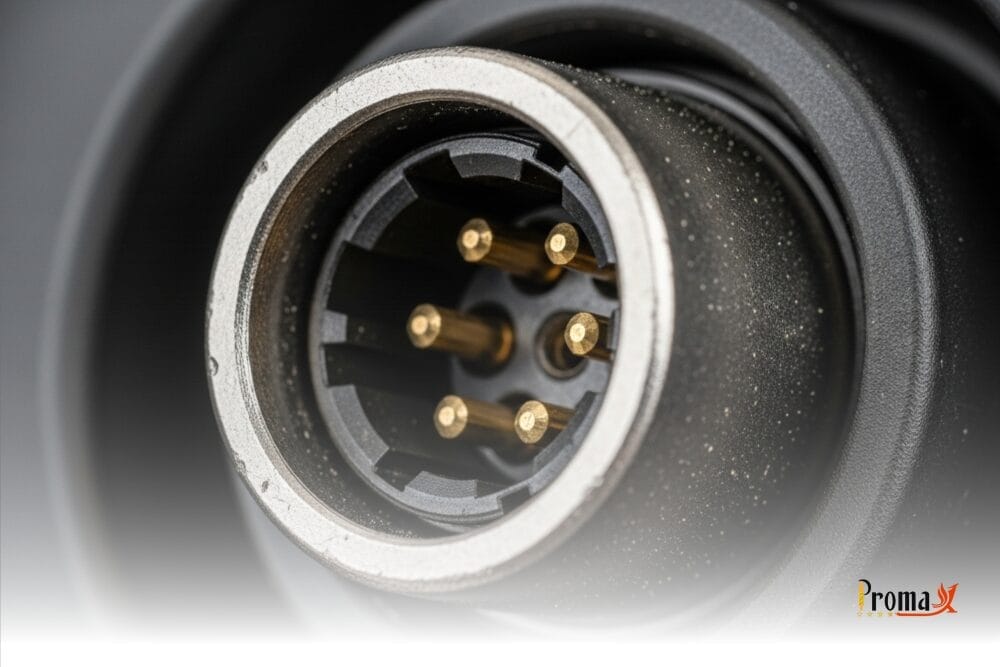
EV charger pins are the actual contact points that transmit power from the charging station into your vehicle’s battery. Sounds straightforward, but these small components need to handle some serious electrical loads—we’re talking anywhere from a few kilowatts for AC charging up to hundreds of kilowatts for DC fast charging. They’re designed to maximize efficiency (minimizing power loss as heat), maintain reliability through thousands of plug-in cycles, and ensure safety by preventing arcing, overheating, or poor connections that could damage equipment or create hazards.
Here’s the thing—charging speed, compatibility, and safety all come down to the quality of those pins. A J1772 connector for single-phase AC charging has different pin requirements than a CCS connector used for DC fast charging. The pins need to match the connector type, handle the current levels involved, and maintain good electrical contact even after years of use. Cheap or poorly designed pins lead to slower charging, inconsistent performance, overheating, and potentially damaged charging ports on expensive vehicles.
Our EV Charger Pins
Our EV charger pins are built to handle the demands of modern electric vehicle charging—high currents, thousands of connection cycles, and varied environmental conditions. We use advanced pogo pin technology to ensure secure, consistent contact for both AC and DC charging applications. The pins themselves (all the different EV charging connector types, even those used by Tesla) are manufactured from copper alloys and brass for excellent conductivity, then plated with silver to further reduce resistance and prevent corrosion. Whether you’re working with Type 1 connectors for single-phase AC charging or Type 2 for three-phase systems, our pins meet global charging standards and deliver reliable performance.
What Sets Our EV Charger Pins Apart
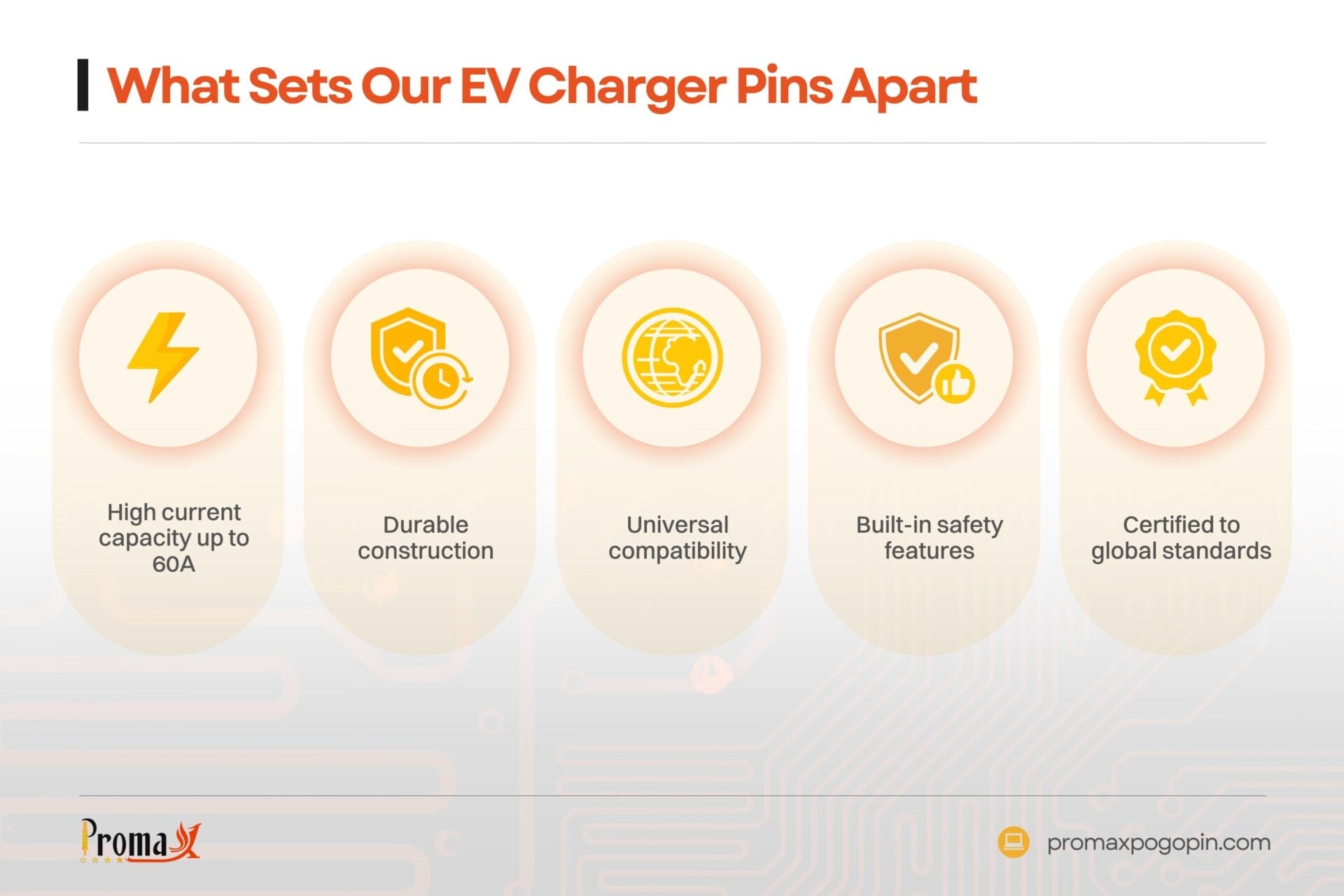
- High current capacity up to 60A – handles DC fast charging without overheating or voltage drop
- Durable construction – brass and copper alloys provide exceptional conductivity and stand up to repeated use
- Universal compatibility – works with Type 1 and Type 2 connectors across different EV charging stations and vehicles
- Built-in safety features – temperature sensors, overcurrent protection, and locking mechanisms prevent failures during charging
- Certified to global standards – UL 2251, IEC 62196, and TUV certifications confirm compliance with international safety and performance requirements
What Types of EV Charger Pins are There?
There are several types of EV charging connectors that cater to different charging needs and regions. Here’s a breakdown of the most common EV connector types:
| Pin Type | Region | Features |
|---|---|---|
| Type 1 (SAE J1772) | North America, Japan | 5 pins, supports up to 240V, single-phase AC charging |
| Type 2 (IEC 62196) | Europe, Australia, Asia | 7 pins, supports up to 480V, three-phase AC charging |
| CCS (Combined Charging System) | Worldwide | Combines AC and DC charging, supports fast charging up to 150+ kW |
| CHAdeMO | Japan | Optimized for DC fast charging, supports 500V, up to 125A |
| GB/T | China | Supports both AC and DC charging, up to 1000V DC and 690V AC |
Each EV charger pin is designed to meet the specific needs of different regions and charging speeds, from level 1 and level 2 chargers to high-speed DC fast charging.
How do EV Charger Pins Work?
EV charger pins work by transferring electrical energy from the charging station to the electric vehicle’s battery. When the plug is inserted, the pins establish both power and control circuits that enable electric vehicle charging.
The pins themselves are typically made from high-conductivity materials such as copper alloys or brass, and they may be plated with silver for enhanced conductivity. The pogo pin connectors used in many charging systems provide a flexible, secure connection, even with repeated use. When aligned properly, these pins deliver the necessary current to charge the battery efficiently.
What are the Safety Features of EV Charger Pins?
Safety is paramount when dealing with electric vehicle connectors. Our EV charger pins are designed with several key safety features to ensure both the vehicle and the user are protected:
- Locking Mechanisms: Prevent accidental disconnection during charging.
- Overcurrent Protection: Guards against excess power flow that could damage the electric vehicle charging system.
- Temperature Sensors: Detect overheating and help prevent fires or damage.
- Weatherproofing: Made from flame-retardant materials to ensure safety in outdoor environments.
These safety protocols, combined with certifications like UL 2251 and IEC 62196, guarantee that the EV charging connector pins are not only efficient but also comply with global charging standards.
How do You Choose the Right EV Charger Pin?
Choosing the correct EV charging connector depends on several factors:
- Vehicle Compatibility: Different EV models use different types of EV charging connectors. For example, North American vehicles may use a J1772 connector, while European vehicles often require a Type 2 connector.
- Charging Speed: If you need fast charging, you’ll want a CCS connector or CHAdeMO, which are designed for DC fast charging.
- Charging Location: Consider whether you are charging at home using AC charging (Level 1 or Level 2) or at a public station requiring DC fast charging.
- Safety Features: Ensure that the EV charging connector includes protections like overcurrent and temperature sensors.
When selecting an EV charging connector, ensure it meets your specific vehicle charging needs, whether it’s for level 2 home charging or DC fast charging at a station.
What is the Pricing for EV Charger Pins?
The cost of EV charger pins can vary based on several factors, including:
- Connector Type: DC fast charging connectors like CCS are more expensive than standard AC charging connectors like Type 1 and Type 2.
- Customization: Pins designed for specific EV models or charging stations may incur additional charges.
- Volume: Bulk purchases for businesses or fleets may offer discounts.
For a detailed price quote, please contact us directly. We offer competitive pricing with the highest standards of quality in the EV charging infrastructure market.
Ready to Upgrade Your EV Charging Experience?
Choosing the right EV charger pin is essential for a fast, reliable, and safe charging experience. Our pogo pin technology offers superior performance, ensuring your EV charges quickly and efficiently, whether you’re using AC charging or DC fast charging.
At Promax Pogo Pin, EV charger pins are designed to meet all charging standards, providing maximum safety, efficiency, and compatibility. Get in touch today to find the perfect solution for your charging needs!
Our Partner Said
“Promax Pogo Pin has helped us with many field issues. I have to say their engineers are so experienced and can quickly help me solve the problem. The problem was high temperature caused by excessive current.”
Paul Jelloy
Buyer from the UK

All Other Manufacturing Products
Promax Pogo Pin is a trusted manufacturer specializing in premium connectors and pogo pin solutions. We deliver a wide selection of advanced products to serve varied industry applications, including battery dock connectors, waterproof connectors, medical connectors, BNC connectors, and high-speed connectors. To explore our complete product catalog and discover detailed information on our offerings, please click the links below for more insights.
EV Charger Pins FAQs
What Is a 3-Pin EV Charger?
A 3-pin EV charger typically refers to a Type 1 connector, which includes three essential pins for power and safety. It is mainly used for single-phase AC charging.
What Type of Pin Is a Car Charger?
Car chargers commonly use Type 1 (SAE J1772) or Type 2 (IEC 62196) EV charging connectors, depending on the region and vehicle type.
Is 32A or 40A MCB for EV Charger?
For higher charging power, a 40A MCB is usually recommended, especially for level 2 charging. The choice between 32A or 40A depends on the charging needs and the electric vehicle’s onboard charger.
“Hearing Aid Pogo Pin Manufacturer”Always be a reliable vendor.
“Hearing Aid Pogo Pin Manufacturer”Based on the audit of factory facilities, R&D engineering, production process, quality process, environmental protection, and employees’ morale, it meets our requirements.
“Hearing Aid Pogo Pin Manufacturer”With strong R & D strength, Dongguan Promax can meet our needs in terms of product size and electroplating specifications.
“Hearing Aid Pogo Pin Manufacturer”We are highly satisfied with the products, which consistently exceed our expectations in functionality, design, aesthetics, and practicality.
“Hearing Aid Pogo Pin Manufacturer”The products consistently meet our high standards, combining excellent functionality, sleek design, and reliable practicality.
“Hearing Aid Pogo Pin Manufacturer”We are impressed by the exceptional quality and thoughtful design, delivering outstanding functionality and aesthetic appeal.