ISO 9001, ISO 14001, ISO 45001, and IECQ QC080000
 Over 15 Years of Expertise
 FREE samples provided to ensure product satisfaction
 Rapid Turnaround: Mass Production Complete in 15 - 20 Days

Adding plating to your pogo pin connectors is absolutely essential to improve its conductivity and prevent corrosion over time. There are several coating options available, and we receive many questions from clients about whether they should choose rhodium or gold plating for their pogo connectors.
Since we’ve helped tons of customers choose between gold and rhodium coatings for their projects, we’re written this guide to help you decide. Whether you’re dealing with audio cables, power cords, or electronic equipment.
Key Takeaways
- Rhodium is tougher than gold and lasts longer when used a lot
- Gold conducts electricity better for clearer signals
- Rhodium handles high heat (up to 600 °C) that would damage gold
- Gold costs less for everyday use
What are Connector Coatings?
Connector coatings are just thin layers of metal that protect plugs and jacks. Think of them like paint on a car – they protect what’s underneath and make everything work better. Without good coating, your connections can fail, and your devices might stop working properly.
Why do They Matter?
Most connector problems happen because of poor coating choices. Whether you’re hooking up speaker cables or power cords, the right coating keeps everything working smoothly for years.
Even the best electronics will fail if the connections aren’t reliable. That’s why companies like Furutech put so much effort into their connector coatings.
How Gold Plating Works in Connectors
Pure copper connectors with gold plating provide outstanding signal transfer while preventing oxidation. Gold coatings usually range from 0.1–5.0μm thick, depending on what you need. Gold plating gives you excellent electrical flow and rust resistance, making it the go-to choice for most electronic connections.
Gold naturally resists corrosion and conducts electricity very well. Many audiophiles prefer rhodium only on pure copper bases when they want the best performance. The difference between gold and other platings becomes most noticeable in high-frequency applications.
The price of gold makes it more expensive than basic platings, but its reliability makes it worth the investment for quality connections. Many users find gold connectors provide the perfect balance of performance and value for everyday electronics.
How Rhodium Plating Works in Connectors
With a hardness of 800–1,000HV (compared to gold’s 200HV), a rhodium connector stays intact even after thousands of uses in harsh conditions. Rhodium plating is super tough and durable—much stronger than gold. The cost of rhodium is higher than gold, but its durability often justifies the price.
This silvery-white metal resists almost all chemicals, even strong acids that would damage other platings. Many audio enthusiasts use rhodium plating when they want the clearest, most detailed sound. Some find that rhodium accentuates bass and provides better definition in complex audio passages.
While rhodium has slightly higher electrical resistance than gold, its amazing durability makes it perfect for sliding contacts, high-frequency connections, and use in harsh chemical or high-temperature environments. Companies that use rhodium for their premium lines often highlight its superior wear characteristics.
When to Use Each Type of Plating
| Feature | Gold Plating | Rhodium Plating | Best For |
|---|---|---|---|
| Hardness | ~200HV | 800-1000HV | Rhodium wins for durability |
| Conductivity | Excellent | Very Good | Gold wins for signal quality |
| Max Temperature | Moderate | Up to 600 °C | Rhodium wins for heat resistance |
| Chemical Resistance | Good | Excellent | Rhodium wins for harsh chemicals |
| Cost | Lower | Higher | Gold wins for everyday use |
| Wear Resistance | Good | Excellent | Rhodium wins for frequent use |
| Audio Performance | Warm, full | Detailed, precise | Depends on system matching |
Gold vs. Rhodium | Performance Comparisons
Rhodium beats gold in toughness and wear resistance, making it better for frequently used connections. Many manufacturers offer it for phono cables and other applications where connections are made and broken often. With 4–5 times the hardness of gold, rhodium plugs last much longer under stress, vibration, and friction.
Gold or silver options provide better conductivity than rhodium, causing less signal loss in high-frequency applications. Some audiophiles think rhodium sounds harsh in certain systems, while others find it provides superior clarity. The gold vs. rhodium debate often comes down to personal preference and system matching.
Industry Uses for Each Plating Type

Gold plating dominates in:
- Smartphones and computers
- Consumer electronics
- Medical implants and sensors
- AC connectors for standard use
- Telecommunications equipment

Rhodium excels in:
- Aerospace systems and satellites
- Military and defense equipment
- Premium audio cables with rhodium terminations
- Automotive controls in high-heat areas
- Test equipment with millions of use cycles
Need pogo pins fast? Talk to an engineer
Get a custom quote, spec matching, and manufacturing guidance—without slowing down your project.
- ISO 9001 / 14001 / 45001 + IECQ QC080000
- 15+ years of expertise
- Free samples
- Mass production in 15–20 days
How We Plate Pogo Pin Connectors
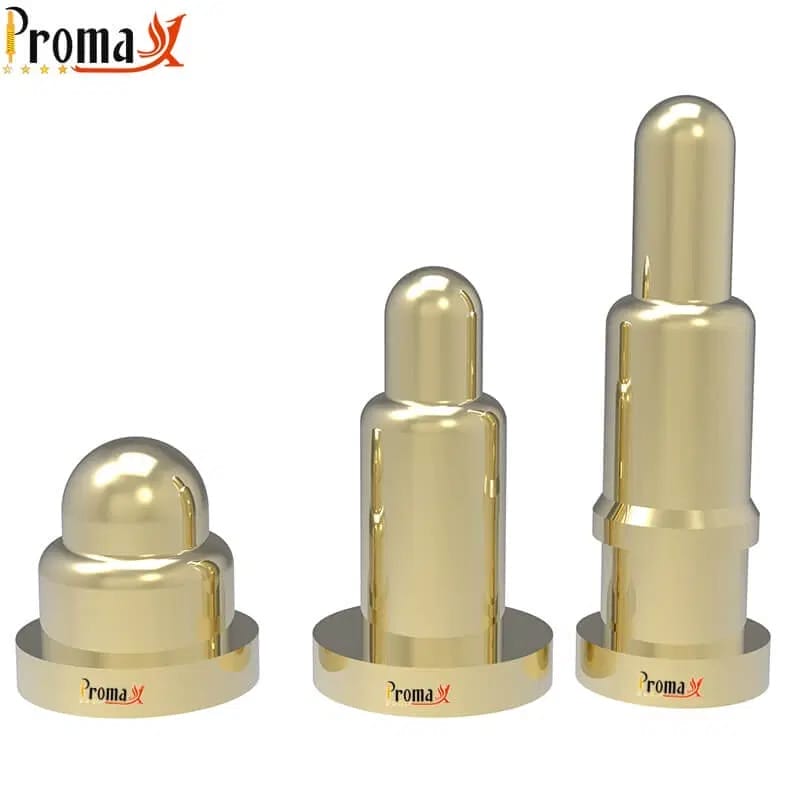
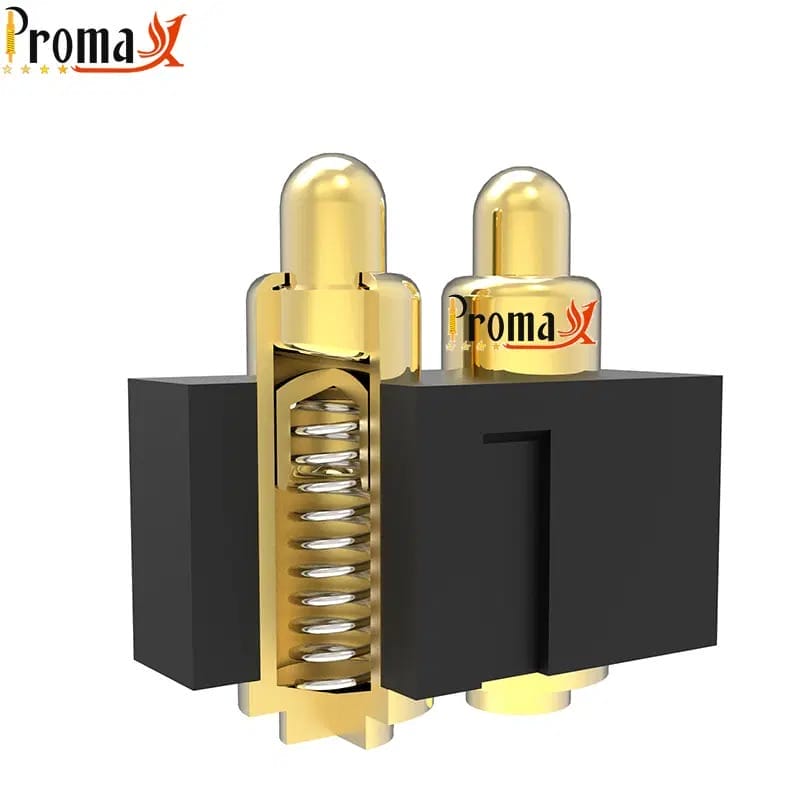
Pogo pin connectors need special plating processes for each part. Whether using gold and silver or rhodium and gold combinations, we ensure optimal performance for each component:
Spring Component
- Material: Beryllium copper or stainless steel
- Plating: Silver or gold
- Purpose: Improves conductivity and prevents rust
- Benefit: Maintains consistent force through thousands of compressions
Barrel Component
- Process: Two-stage plating
- First layer: Nickel under-plating (1-2 microns)
- Second layer: Gold plating (0.1-1.0 microns)
- Special technique: Side holes added to small-diameter barrels to ensure complete internal plating
Pin Shaft
- Standard: Gold plating
- Alternative: Rhodium for extreme wear applications
- Impact: Plating thickness directly affects connector lifespan
Standards That Matter for Quality Connectors
Connector plating must meet strict industry standards to ensure reliability. Plating for connectors follows standards like MIL-DTL-45204D and ASTM B488, with thickness classes from Class 00 (0.5μm) to thicker applications exceeding 2.5μm for critical parts.
Rhodium plated plug options, while having fewer specific standards, must still meet performance requirements in IPC and ASTM guidelines. Both types must comply with RoHS regulations that ban harmful substances like lead and cadmium. Although, the professionals say the rhodium market is growing at about 8% each year.
Our production processes meet ISO 9001 quality standards, ensuring consistent quality in every connector we produce. We perform rigorous testing on all our plated connectors to verify they meet these standards before shipping.
How to Pick the Right Plating for Your Project
Choose gold plating when:
- You need excellent conductivity in normal conditions
- Your budget is more limited
- Connections will be made/broken less than 5,000 times
- Operating temperatures stay below 200 °C
- You’re working with warm cables that need reliable connections
Pick rhodium plating when:
- Your connections face extreme conditions
- Connections will be made/broken thousands of times
- Your application involves high heat (above 200 °C)
- Exposure to corrosive chemicals is likely
- You want gold softens dynamics and reduces detail to be avoided
Consider using ribbon vs. round wire designs with your chosen plating to optimize performance for specific applications. The difference vs. standard designs can be significant in critical applications.
Our Testing Process Ensures Quality
We verify plating quality through multiple testing methods:
- Thickness measurement using X-ray fluorescence
- Adhesion testing with tape and bend tests
- Wear testing with repeated connection cycles
- Environmental testing in salt spray and acid exposure
- Contact resistance measurement before and after cycling
Every production batch undergoes comprehensive testing including visual inspection, dimensional checks, and functional testing to ensure consistent performance regardless of plating type.
Ready to Choose the Right Connector Plating?
The choice between gold and rhodium plating depends on your specific needs. Gold offers excellent conductivity and value for most standard applications, while rhodium provides superior performance in extreme environments, where its durability justifies the higher cost.
Contact Promax Pogo Pin today to discuss your connector requirements. Our engineering team will help you select the perfect plating solution for your project, ensuring reliable performance throughout your product’s lifetime. With expertise in both gold and rhodium technologies, we deliver connectors that meet your exact specifications.
Rhodium vs Gold Connector Plating FAQs
Can you mix gold and rhodium plated connectors?
Yes, you can use gold and rhodium-plated connectors together in the same system. This creates what’s called a bimetallic junction. It works fine in most cases, but might have slightly higher contact resistance than matching metals. For audio systems where every bit of performance matters, it’s best to use the same plating type throughout.
How does salt or chemical exposure affect my plating choice?
Environmental factors dramatically impact how long your plating lasts. Salt spray, industrial chemicals, and exhaust gases quickly damage standard platings. Rhodium resists most chemicals, including industrial acids and automotive fluids, while gold handles sulfur compounds better. For coastal installations or chemical plants, rhodium’s superior resistance often justifies its higher cost.
Does plating thickness really affect how long connectors last?
Absolutely! Thicker plating means longer connector life, especially for frequently used connections. Thicker coatings (1.0μm+ for gold, 0.5μm+ for rhodium) significantly extend wear life by providing more material before the base metal gets exposed. However, rhodium that’s too thick (above 1.0μm) can develop stress cracks. The best thickness depends on your specific needs and how often connections will be made and broken.
Back to Top: Rhodium vs. Gold Connector Plating
Need pogo pins fast? Talk to an engineer
Get a custom quote, spec matching, and manufacturing guidance—without slowing down your project.
- ISO 9001 / 14001 / 45001 + IECQ QC080000
- 15+ years of expertise
- Free samples
- Mass production in 15–20 days